Independent · Non-Political · Mogadishu, Since 2015

Research. Reform. Resilience.

The Institute of Public Finance Somalia is an independent think tank strengthening how public money is raised, managed, and accounted for so government works better for every Somali

Trusted across federal & member-state government

Partnered with development institutions

National Accounts

The Institute, in balance

Years advancing public finance
10+
Government training initiatives
50+
Research publications
10+
Specialist centres
4

Who we are

Somalia's institute for sound public finance turning rigorous evidence into reforms that government can actually run.

Independent think tankFounded 2015MogadishuNon-political

The Institute of Public Finance (IPF) Somalia is an independent, non-political think tank dedicated to strengthening Public Financial Management through research, education, and capacity building.

We help the institutions that handle public money government, agencies, and partners to plan, spend, and account for funds responsibly. Our work spans fiscal policy, revenue and tax administration, anti-corruption, and public-sector reform.

Working alongside national counterparts and development partners, we aim to be Somalia's leading institution for excellence in macroeconomic and public financial management.

Our Impact

Public finance, measured like an account.

We hold ourselves to the same standard we ask of the institutions we serve: every result recorded, every claim balanced. Here is where the Institute stands.

Government training initiatives delivered
50+
Research publications & assessments
10+
Specialist centres of expertise
4
Years strengthening Somali public finance
10+

From evidence to lasting reform

A disciplined sequence that moves an engagement from diagnosis to change that government owns and sustains.

01 Diagnose

Assess the system

We measure performance with data, surveys, and PEFA-style assessments to see exactly where the gaps are.

02 Advise

Design the reform

We work with counterparts to shape policies, processes, and budgets that fit Somalia's context.

03 Build

Grow capacity

We train and mentor the people who run public finance day to day, so skills stay in the institution.

04 Sustain

Embed the change

We monitor results and hand over systems that keep working long after the engagement ends.

Expert disciplines

IPF Centres

Centre 01

Building Public Finance Capabilities

Hands-on training and mentoring for ministries, agencies, and Federal Member States to run modern public financial management.

Learn more →

Centre 02

Fiscal Analysis

Independent analysis of budgets, debt, and macro-fiscal trends to support credible, evidence-based decisions.

Learn more →

Centre 03

Tax Law & Administration

Research and advice on tax policy, legislation, and administration to build a fair and efficient revenue system.

Learn more →

Centre 04

Performance Evaluation of Tax Expenditure

Measuring the real cost and value of tax exemptions and incentives to inform better fiscal choices.

Learn more →

Focus Areas

Eight focus areas. One mission.

Public Financial Management

Strengthening budget systems, treasury operations, and fiscal reporting across government.

Revenue & Tax Policy

Building a domestic revenue base that is fair, efficient, and supports development.

Fiscal Decentralisation

Supporting intergovernmental fiscal relations and subnational finance in a federal system.

Debt Management

Improving government borrowing frameworks and debt sustainability analysis.

Climate Finance

Bringing climate and environmental priorities into public budgets.

Service Delivery

Enhancing capacities in public finance and frontline service delivery.

Procurement & Audit

Raising standards in public procurement and internal and external audit functions.

Statistical Capacity

Strengthening national accounts and economic statistics for evidence-based policy.

Stronger public finance for a more resilient Somalia.

Discuss a programme →

Selected Projects

Work that strengthened the system

A sample of engagements with the Federal Government of Somalia and its institutions.

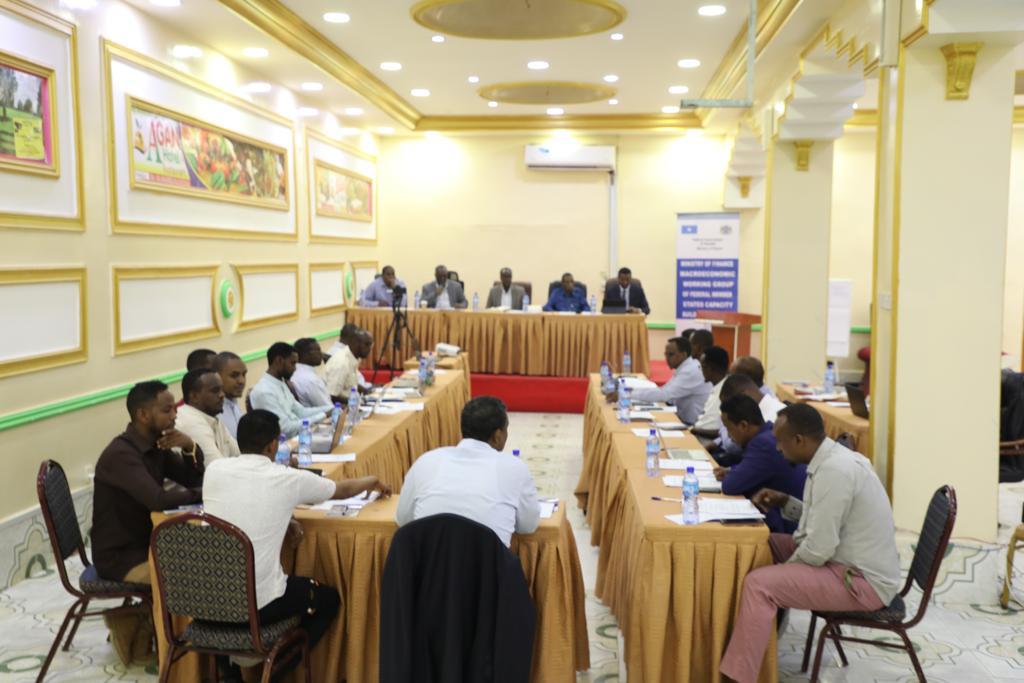
Capacity Building Program for Macroeconomics Working Group (2023-2024)Completed

Capacity Building Program for Macroeconomics Working Group (2023-2024)

The Capacity Building Program for the Macroeconomics Working Group, launched in 2023, represents a cornerstone of IPF’s efforts to enhance macroeconomic planning and fiscal management in Somalia. This program, which spans across 2023 and 2024, is focused on strengthening the skills and capabilities of macro-fiscal departments within both the Federal Government of Somalia (FGS) and its Federal Member States (FMS). The primary objective is to equip policymakers and financial managers with the tools necessary to engage in effective macroeconomic analysis, forecasting, and budgeting. By participating in a series of workshops, training sessions, and technical assistance initiatives, officials from both the federal and state levels will develop a deeper understanding of macroeconomic principles, allowing them to make more informed fiscal policy decisions. This program is expected to contribute to the long-term economic stability and sustainable growth of Somalia by promoting sound fiscal governance practices.

October 12, 2024Full report
Unified Chart of Accounts and Standardized Budget Process (2023)Completed

Unified Chart of Accounts and Standardized Budget Process (2023)

In 2023, IPF began working on the Development and Implementation of a Unified Chart of Accounts (COA) and a Standardized Annual Budget Process for the Banadir Regional Administration. This project is essential to creating a more coherent financial management framework across different government entities within the region. By implementing a unified Chart of Accounts, IPF is helping to standardize the classification of financial information, which will allow for better financial reporting, easier comparison of fiscal data across departments, and enhanced budget transparency. Additionally, the standardized budget process ensures that all government departments follow the same guidelines when preparing and submitting their annual budgets. This project is aimed at increasing efficiency, reducing errors in financial reporting, and ultimately fostering a more transparent and accountable fiscal environment for Banadir Region.

October 12, 2024Full report
Recent and Past Projects of the Institute of Public Finance of SomaliaCompleted

Recent and Past Projects of the Institute of Public Finance of Somalia

The Institute of Public Finance of Somalia (IPF) has played a crucial role in strengthening fiscal governance, enhancing financial transparency, and building institutional capacity across various levels of government. Since 2015, IPF has spearheaded numerous initiatives, including domestic revenue mobilization programs, public financial management (PFM) reforms, and tax administration improvements in multiple Somali states such as Jubbaland, Hirshabelle, and Galmudug. The institute has conducted extensive capacity-building programs, such as training government officials on financial management systems (FMIS), expenditure tracking, and macroeconomic analysis. Additionally, IPF has collaborated with international organizations like UNOCHA to provide third-party monitoring and institutional risk assessments, ensuring accountability and efficiency in financial operations. The institute’s efforts extend to fiscal decentralization, climate-sensitive budgeting, and public sector reforms, contributing to Somalia’s long-term economic stability. Through targeted assessments, policy development, and training programs, IPF continues to shape Somalia’s financial landscape by promoting responsible governance and sustainable economic policies.

March 13, 2026·Client: MohamudFull report

See the full portfolio

Explore the Institute's recent and past projects across Somalia's public finance system.

All projects

Insights & Publications

Latest thinking

Research and commentary on the questions shaping Somalia's fiscal future.

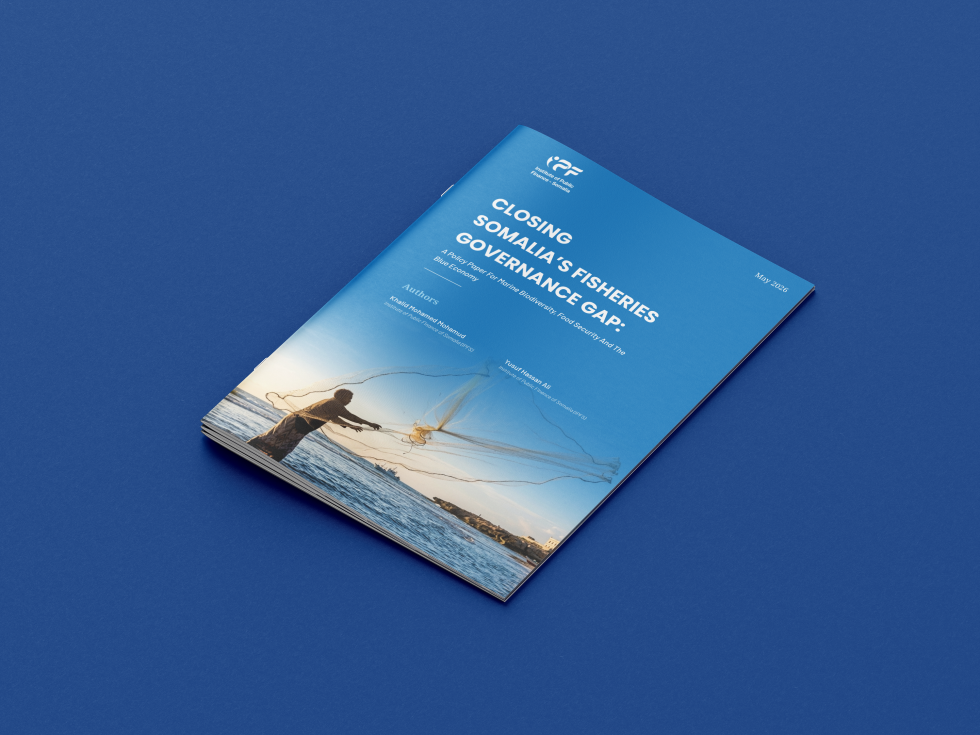
Closing Somalia’s Fisheries Governance Gap: A Policy Paper for Marine Biodiversity, Food Security and the Blue EconomyReport

Closing Somalia’s Fisheries Governance Gap: A Policy Paper for Marine Biodiversity, Food Security and the Blue Economy

The report, authored by Khalid Mohamed Mohamud and Yusuf Hassan Ali from the Institute of Public Finance of Somalia (IPFS), argues that Somalia’s fisheries crisis is not simply about overfishing or illegal foreign vessels. Instead, the deeper problem is a governance gap: Somalia has vast marine resources, but lacks the institutions, infrastructure, monitoring systems, and policy implementation needed to convert those resources into sustainable national welfare. The paper presents fisheries governance as a critical issue connected not only to marine conservation, but also to food security, employment, public revenue, state-building, coastal stability, and the development of Somalia’s blue economy. Main Argument of the Report Somalia possesses one of the largest marine domains in Africa: Coastline: approximately 3,333 km Exclusive Economic Zone (EEZ): more than 1.07 million km² Estimated sustainable fisheries potential: over 200,000 metric tons annually Despite this enormous resource base, Somalia captures very little domestic benefit from fisheries. The report argues that: Fish stocks are poorly monitored. Illegal, unreported, and unregulated (IUU) fishing remains widespread. Infrastructure such as cold chains, ports, storage, transport, and processing facilities is underdeveloped. Licensing systems are inconsistent and weakly enforced. Fisheries data systems and registries are incomplete. Domestic value addition is extremely limited. As a result, Somalia loses large amounts of potential income, employment, food access, and public revenue. Key Findings 1. Huge Gap Between Resource Potential and Actual Domestic Catch The report identifies a major mismatch between Somalia’s marine potential and current harvest levels. Although Somalia could sustainably harvest well over 200,000 metric tons annually, documented catches in 2022 were only around: 6,000 metric tons by artisanal fishers 13,000 metric tons by industrial foreign fleets Total documented catch: roughly 19,000 metric tons The report stresses that this does not mean Somalia should immediately increase fishing intensity. Instead, it shows that Somalia lacks the governance systems required to properly manage and benefit from its fisheries resources. The authors argue that low domestic catch can coexist with high external extraction because much fishing activity occurs beyond effective Somali monitoring and regulation. 2. Somalia Faces a Food Security and Nutrition Paradox Despite abundant marine resources, fish consumption in Somalia remains extremely low. The report notes: Somalia’s per capita fish consumption: 3.3 kg African average: 9.1 kg Global average: 20.7 kg The report explains that this is not simply due to cultural preference. Instead, it reflects: Weak cold-chain systems Poor transportation Limited fish processing Weak domestic market integration High inland distribution costs As a result, coastal fish harvests fail to translate into broad national nutritional improvements. The paper emphasizes that fisheries policy should therefore also be treated as food-system policy. 3. Massive Economic Leakage Through IUU Fishing and Weak Governance One of the report’s strongest findings concerns the loss of fisheries value to foreign actors. According to cited estimates: Somalia’s domestic fisheries sector value: about US$135 million Estimated value captured externally through IUU fishing: about US$306 million The report argues that Somalia’s problem is not only low production, but also weak control over access to its marine resources. The paper identifies several causes of value leakage: Unlicensed or weakly monitored fishing Opaque access agreements Weak inspection systems Limited domestic processing Poor tax and fee collection Lack of traceability systems The authors argue that fisheries rents are largely captured outside formal Somali institutions, weakening both public finances and incentives for domestic investment. 4. Fisheries Governance is Linked to Security and Stability The report highlights how fisheries governance intersects with coastal security and piracy. Weak governance, unequal distribution of marine benefits, and IUU fishing can contribute to grievances and instability in coastal communities. The paper argues that fisheries governance should therefore be seen as part of Somalia’s broader state-building and stabilization agenda. 5. Somalia Has Improved Policies, But Weak Implementation The report recognizes significant policy progress in recent years: Federal Fisheries Law adopted in 2023 Somalia Fisheries Master Plan endorsed in 2024 Launch of the Badmaal fisheries project Biodiversity conservation initiatives launched in 2026 However, implementation remains weak. By April 2025: Only 2 fisheries management plans had been developed out of a target of 20. Fisheries registries remained largely non-operational. Patrol days were still recorded at zero. Climate-resilient fisheries infrastructure was not yet operational. Scientific stock assessments were absent. The report concludes that Somalia currently has “more policy architecture than implementation depth.” The Governance Gap Framework The authors define Somalia’s fisheries governance gap as the distance between: what Somalia’s marine resources could generate under proper management, and what the country currently captures in terms of food, jobs, public revenue, biodiversity protection, and sustainable economic development. The report identifies four interconnected deficits: Weak knowledge of fishing effort and stock conditions Low domestic value capture Weak integration of fisheries into food systems Limited state capacity for enforcement and coordination Major Policy Recommendations The report strongly argues against jumping immediately to advanced quota systems or complex fisheries markets. Instead, it proposes a phased and realistic reform strategy. Phase 1: Build a Minimum Viable Governance System The report recommends immediate priorities such as: Digital registries for fishers, vessels, and licenses Public disclosure of offshore fishing licenses Standardized landing-site logbooks Risk-based monitoring and surveillance systems The authors argue that these foundational systems are more important than advanced reforms at Somalia’s current stage. Phase 2: Invest in Infrastructure The report recommends investments in: Landing sites Ice production Cold storage Hygienic handling systems Transportation infrastructure Infrastructure is presented not only as an economic investment, but also as a governance tool because it improves inspection, monitoring, traceability, and enforcement. Phase 3: Protect Artisanal Fisheries and Expand Co-Management The report recommends: Legally protected inshore artisanal fishing zones Restrictions on industrial vessel encroachment Community-based co-management systems Greater participation of women in fisheries governance The authors argue that centralized government control alone is unlikely to succeed in Somalia’s context. Phase 4: Introduce Traceability and Certification Once basic monitoring systems exist, Somalia can begin implementing: Verified legal sourcing systems Traceability programs Sustainability certification in selected fisheries However, the report warns that certification is premature without functioning cold chains and data systems. Phase 5: Shift to Transparent Performance-Based Access Agreements The final phase would involve: Transparent offshore licensing Standardized access contracts Monitoring requirements Observer programs Public reporting of fishing agreements Stronger enforcement conditions Only after foundational governance systems exist should Somalia consider more sophisticated quota systems. Economic Theory in the Appendix The report includes a bioeconomic explanation of fisheries management. It explains that: Fish stocks are renewable resources. Open-access fisheries create incentives for overexploitation. Without regulation, fishers continue entering the fishery until profits disappear. Poor governance leads not only to ecological damage, but also to economic inefficiency and lost national welfare. The report applies this theory directly to Somalia, arguing that the country risks losing both ecological sustainability and economic value unless governance systems improve. Overall Conclusion The report concludes that Somalia’s fisheries challenge is fundamentally an institutional and governance problem rather than simply an environmental issue. Somalia does not lack marine resources. Instead, it lacks: effective monitoring systems, reliable fisheries data, infrastructure, enforcement capacity, transparent licensing, and coordinated governance institutions. The authors argue that Somalia should avoid false choices between: conservation and development, artisanal livelihoods and public revenue, exports and domestic food security. Instead, Somalia should focus on building governance systems capable of aligning all of these goals simultaneously. The central message of the report is that Somalia’s future fisheries success depends not on catching more fish immediately, but on building the institutional foundations needed to transform marine abundance into long-term national welfare.

May 28, 2026PDF available
Somalia’s Tax Gap: Why Closing It Matters for the Country’s FuturePolicy Brief

Somalia’s Tax Gap: Why Closing It Matters for the Country’s Future

Somalia’s tax system faces a significant challenge, with a tax-to-GDP ratio of around 3%, one of the lowest globally, highlighting a substantial gap between potential and actual revenues. The tax gap—the difference between what should be collected under full compliance and optimal policy, and what is actually collected—was estimated at 34% in 2023, with actual revenue reaching $329.5 million and a potential exceeding $500 million. The largest shortfalls were in income tax and sales tax, both showing gaps above 60%, while customs duties, although the largest revenue source, still face leakage due to administrative fragmentation and evasion. Contributing factors include the collapse of state institutions post-1990s, limited tax reach due to insecurity and armed groups like Al-Shabaab, dominance of the informal economy, weak intergovernmental fiscal arrangements, low public trust, and lack of broad-based taxes like VAT and excise duties. The Federal Member States (FMS) like Puntland and Jubbaland collect and retain their port revenues, creating regional disparities, while inland states remain underfunded. Informal taxation, regressive local levies, and absence of visible public services further discourage voluntary compliance. To address this, the paper proposes a multi-dimensional Domestic Revenue Mobilization strategy combining policy reforms such as enacting a VAT law, implementing the new Income Tax Act, introducing excise duties, and reducing exemptions; with administrative improvements including expanding the Integrated Tax Administration System (ITAS), modernizing customs, digital tax payment systems via mobile money, and using third-party data for analytics. Furthermore, establishing a national customs revenue-sharing framework is critical for national equity and effective state-building. Trust-building through improved services, phased formalization of the informal sector, and investment in governance and security are essential to close the gap sustainably. The aim is to eventually increase Somalia’s tax-to-GDP ratio from its current 3% toward an ambitious long-term goal of 15%, reducing reliance on foreign aid, increasing service delivery capacity, and strengthening the social contract between citizens and the state. The findings of the Institute of Public Finance – Somalia (IPFS) stress that fiscal reform is not merely technical but foundational to peace, development, and legitimacy in fragile states like Somalia.

October 21, 2025PDF available
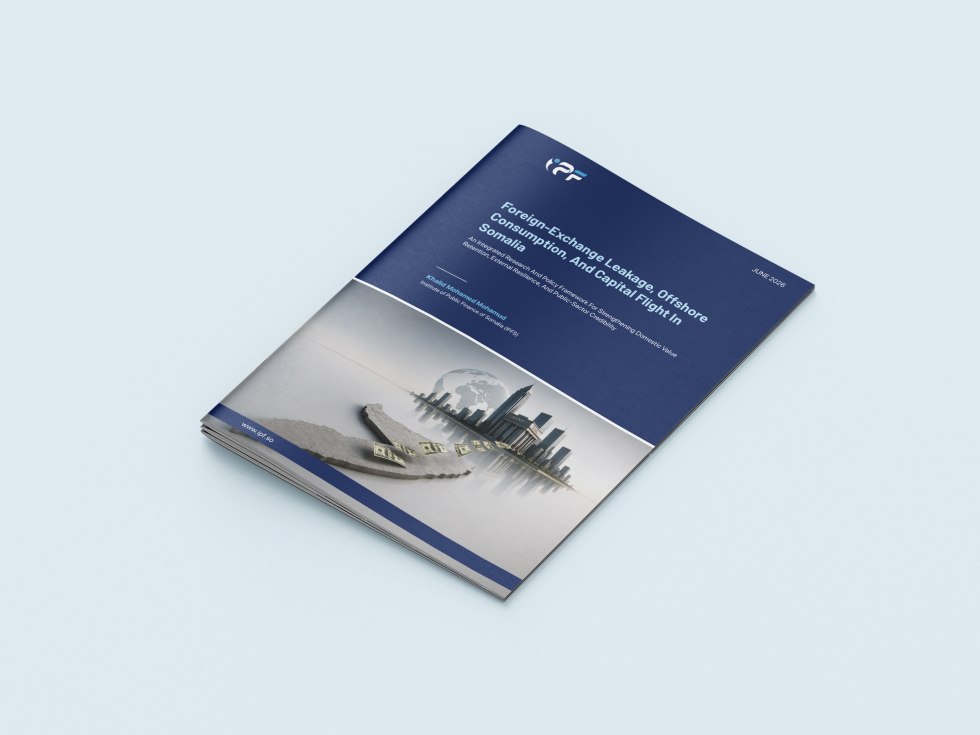
Foreign-Exchange Leakage, Offshore Consumption, and Capital Flight in SomaliaResearch

Foreign-Exchange Leakage, Offshore Consumption, and Capital Flight in Somalia

Executive Summary This report encapsulates the comprehensive efforts undertaken to develop and implement a Unified Chart of Accounts (UCoA) and standardize the annual budget formulation and preparation process for the year 2024. Concluding in December 2023, this initiative marks a pivotal advancement in the financial management framework, ensuring consistency, transparency, and efficiency in fiscal operations and reporting. Introduction Background The introduction of a Unified Chart of Accounts and the standardization of the budget preparation process are critical components of enhancing public financial management (PFM). These measures are designed to align with international best practices, facilitating better fiscal analysis, reporting, and decision-making. Objectives To develop a comprehensive UCoA applicable across all government entities. To standardize the 2024 annual budget formulation and preparation process, enhancing its efficiency and transparency. Development and Implementation Process Unified Chart of Accounts (UCoA) Design and Development: The UCoA was meticulously crafted to accommodate the diverse financial transactions and reporting needs of all government entities, ensuring compatibility and comparability. Stakeholder Consultation: Input and consensus from various government departments and agencies were sought, ensuring the UCoA’s applicability and acceptance. Implementation Training: Extensive training sessions were held to familiarize finance personnel with the UCoA’s structure and application. Standardized Budget Formulation Process Process Design: A standardized process for the 2024 annual budget formulation was developed, incorporating timelines, templates, and guidelines. Pilot Testing: The process was pilot tested with a select group of departments to gather feedback and make necessary adjustments. Finalization and Rollout: Based on pilot feedback, the process was finalized and rolled out across all government entities. Achievements and Impact Enhanced Consistency: The UCoA provides a standardized framework for financial transactions and reporting, improving comparability across periods and entities. Improved Efficiency: The standardized budget formulation process streamlines budget preparation, reducing redundancies and improving timelines. Increased Transparency: These initiatives contribute to greater fiscal transparency, facilitating improved oversight and public accountability. Challenges Encountered and Solutions Several challenges were encountered during the project, including resistance to change and the need for extensive training. These were addressed through comprehensive change management strategies and the provision of targeted training and support. Next Steps Monitoring and Evaluation: Ongoing monitoring and evaluation will be conducted to assess the effectiveness of the UCoA and the standardized budget process. Continuous Improvement: Feedback mechanisms are in place to identify areas for improvement and ensure the UCoA and budget process remain relevant and effective. Expansion and Integration: Future efforts will focus on further integrating these initiatives with other PFM reforms and technological advancements. Conclusion The successful development and implementation of the Unified Chart of Accounts and the standardized budget formulation process represent significant milestones in the journey towards improved public financial management. These initiatives are foundational to achieving greater fiscal discipline, transparency, and accountability, laying the groundwork for sustainable economic growth and development.

June 24, 2024·By Mohamud

Who we work with

We deliver in partnership with government, member states, and development institutions.

Federal Government of SomaliaFederal Member StatesMinistries of FinanceRevenue AuthoritiesDevelopment partnersCivil society

Let's build stronger public finance systems.

Commissioning research, a capacity-building programme, or a PFM reform? We'd like to hear from you.